


Views: 0 Author: Site Editor Publish Time: 2025-07-15 Origin: Site


Freight doesn't always arrive at a loading dock. More often than not, drivers pull up to a storefront, warehouse, or residential address where the only option is to move cargo from truck to ground—manually. That's where lift gates come in.
Whether you're managing a fleet or sourcing a single delivery truck, understanding lift gates can dramatically change how efficiently your operation runs. This guide covers everything you need to know: what lift gates are, the different types available for trucks, and how to choose the right one for your needs.
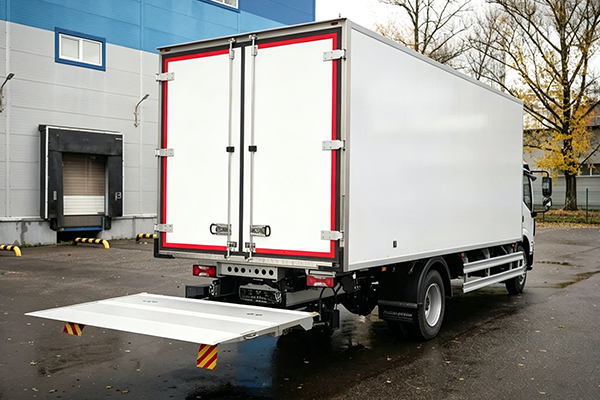
A lift gate is a mechanical platform attached to the rear of a truck or trailer. Powered by hydraulics or electric motors, it raises and lowers cargo between the truck bed and ground level—eliminating the need for forklifts, ramps, or manual lifting.
Lift gates are standard equipment across industries like retail, food service, healthcare logistics, and e-commerce fulfillment. They're especially critical for last-mile delivery, where dock-height loading is rarely available.
The platform itself can typically support anywhere from 1,500 to 5,000 pounds, depending on the model and truck class. Operators control the gate using a simple switch or remote, making the loading process faster and safer for a single driver working alone.
Not all lift gates are built the same. The right type depends on your truck size, cargo weight, and how frequently you load and unload. Below is a breakdown of the most common lift gate types used on trucks today.
Lift Gate Type | Best For | Weight Capacity | Key Benefit |
Tuck-Under (Rail Gate) | Frequent deliveries, urban routes | 1,500–3,500 lbs | Folds under truck, saves rear space |
Tuck-Away | Medium to large trucks | 2,000–5,000 lbs | Stores compactly, good clearance |
Cantilever | Heavy freight, industrial use | Up to 5,000 lbs | Full-width platform, no interference |
Slider | Refrigerated trucks, specialty loads | 2,000–4,000 lbs | Slides out from under truck body |
Column Lift | Extreme heavy loads | Up to 6,500 lbs | Maximum stability and capacity |
Also called rail gates, tuck-under lift gates are the most widely used type in commercial trucking. The platform folds up and tucks beneath the truck bed when not in use, keeping the rear clear for loading dock access. These are a practical choice for delivery trucks making multiple stops throughout the day.
Cantilever lift gates extend outward from the rear of the truck without rails running along the side. This full-width design makes them ideal for oversized pallets or irregularly shaped freight. They're commonly found on box trucks and straight trucks used in industrial or construction supply chains.
Column lift gates use vertical columns to guide the platform up and down, offering maximum stability for extremely heavy loads. These are less common on standard delivery trucks but are widely used in specialized freight and heavy equipment transport.
Selecting a lift gate isn't just about weight capacity. Several operational factors should guide your decision.
Start with your maximum load weight. If you regularly move pallets of packaged goods under 2,500 lbs, a tuck-under gate covers most use cases. For heavier freight—machinery, medical equipment, commercial appliances—a cantilever or column gate provides the capacity and stability you need.
Platform width matters too. Standard lift gate platforms range from 60 to 96 inches wide. If your freight is wide or awkwardly shaped, a full-width cantilever platform reduces the risk of tipping or damage during loading.
High-frequency use accelerates wear on hydraulic seals, motors, and platforms. For fleets running daily routes with multiple stops, choosing a gate rated for high-cycle use—and one from a manufacturer with strong parts availability—reduces long-term maintenance costs.
Trucks that split time between docks and street-level deliveries benefit from tuck-under or tuck-away designs that allow full rear-door access without removing or repositioning the gate.
Class 3–5 trucks (like medium-duty box trucks) typically pair well with tuck-under or cantilever gates in the 1,500–3,500 lb range. Class 6–8 trucks, including larger straight trucks and tractor-trailers, are better suited for heavy-duty cantilever or column gates with capacities above 4,000 lbs.
Lift gate safety is non-negotiable. According to the Occupational Safety and Health Administration (OSHA), improper use of loading equipment is a leading cause of workplace injuries in freight and warehousing environments.
Key safety practices include:
· Never exceed the rated capacity. Each gate is rated for a specific maximum load. Overloading causes platform failure and voided warranties.
· Inspect the gate before each shift. Check hydraulic lines, safety chains, and platform locks for wear or damage.
· Keep personnel clear of the platform during operation. Establish a clear zone around the lift gate when raising or lowering cargo.
· Train all operators. Even experienced drivers should receive formal training on the specific gate model installed on their truck.
Regular maintenance schedules—typically every 6 months for commercial fleets—extend gate life and reduce the risk of on-route failures.
Lift gates aren't an afterthought—they're a core part of how modern trucking operations handle cargo efficiently and safely. From the compact tuck-under gates on urban delivery routes to the heavy-duty column lifts serving industrial freight, each type serves a specific function that directly affects how smoothly a driver can complete a job.
Choosing the right lift gate for a truck comes down to three things: the weight and size of your cargo, the frequency and environment of your deliveries, and the class of truck you're operating. Get those three factors right, and a lift gate becomes one of the most productive tools in your fleet.
To recap: a lift gate is a powered rear platform that raises and lowers cargo on a truck; common types include tuck-under, cantilever, and column lifts; selection should be based on load weight, delivery frequency, dock access, and truck class; and safety compliance is essential to protect both operators and cargo.


+86-13828071158
info@niuliauto.com
+86-13828071158


